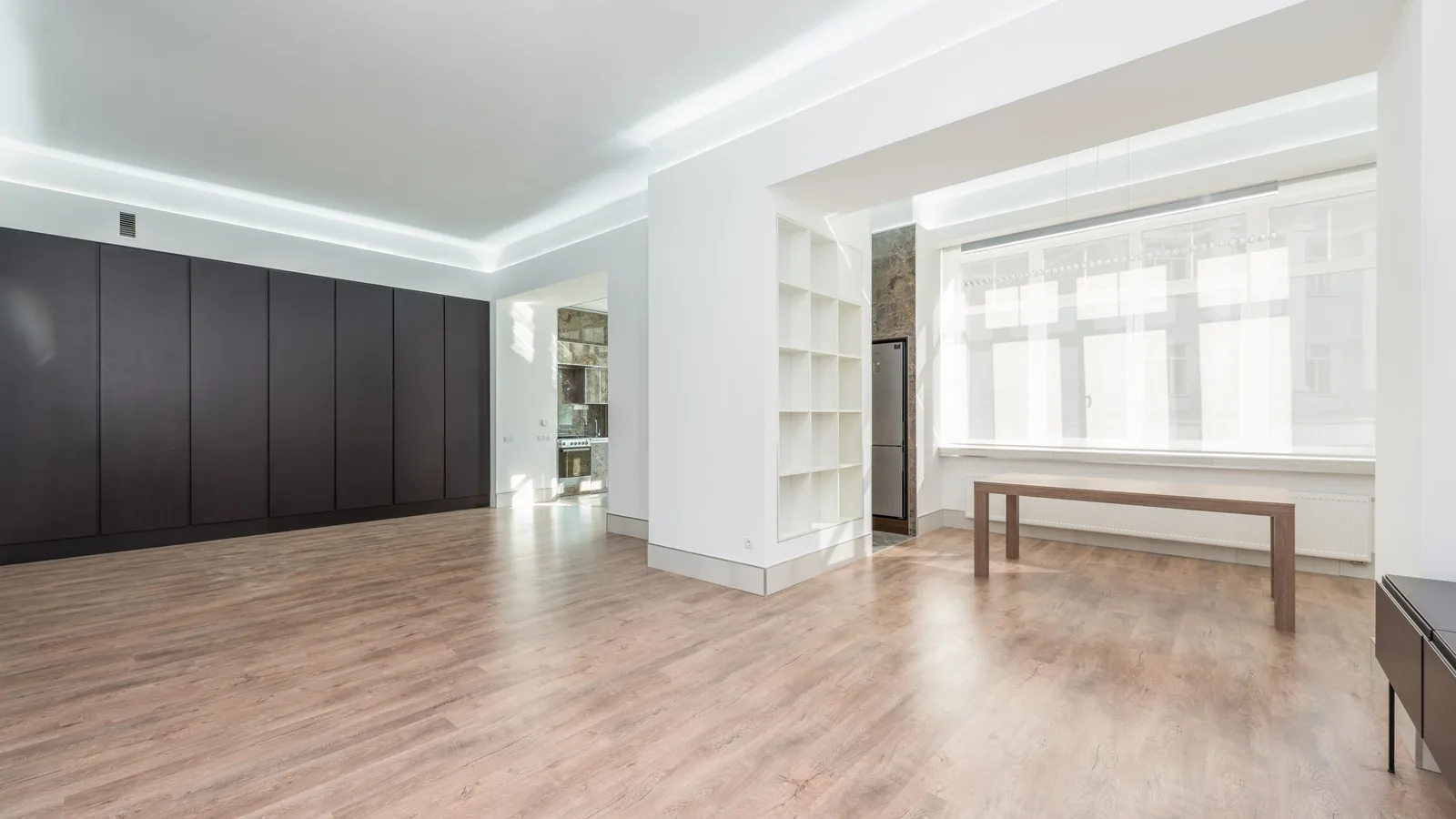
We clean a lot of empty properties around Louisville — tenants moving out, landlords turning a unit around, families handing over a house at closing. The pattern is remarkably consistent: the place looks fine at a glance, and the deposit still gets docked over the same five or six things. None of them are hard. They are just invisible until somebody with a checklist goes looking.
Start with the principle that makes the whole job different from a normal clean. An empty property has no furniture to hide behind, which cuts both ways: everything is reachable, and everything is visible. Marks that were behind a sofa for three years are now the first thing an inspector sees, and the outline of where a rug sat is obvious on a floor that has faded around it.
Inside the oven is the single most common deduction, and it is the one people most often attempt themselves and give up on halfway. A proper oven clean is not scrubbing — it is applying the product, leaving it on long enough to do its work, and coming back. Racks come out and get soaked separately. The glass in the door usually has two panes with a gap between them, and grease gets in there; on most models the door lifts off and the panes come apart, which is the only way to get it clean. If yours cannot be opened, say so rather than smearing it.
Extractor filters are second. They are metal mesh above the hob, they slide out, and after a couple of years they are saturated with grease. Most tenants have never touched them and a lot do not know they come out at all. They go in hot water with a degreaser and come out looking new, and an inspector who lifts one out and finds it clean tends to stop looking quite so hard at everything else.
Third: inside cupboards and drawers, including the runners. Crumbs and dust collect in the corners of every kitchen drawer and in the channel the runner sits in. Vacuum them out before wiping — wiping first just turns crumbs into paste. The same applies to the fridge seal, which is a rubber concertina that traps everything and pulls back for cleaning.
Fourth, and the one that surprises people, is the top of doors and door frames. Nobody looks up there while they live somewhere, and it collects a felt of dust that shows immediately when a hand goes across it. The same goes for the tops of kitchen cabinets where there is a gap to the ceiling, light fittings, and the extractor housing itself.
Fifth: window tracks and the channel under the sliding door. Grit, dead insects and a paste of dust and rainwater end up in there, and it is a two-minute job with a vacuum crevice tool and a damp cloth. Leaving it is one of those small things that tells an inspector how the rest of the clean was done.
Beyond the five, the rest of a move-out clean is systematic rather than clever: every surface in every room top to bottom, inside every appliance, all the bathroom fittings descaled, skirting and trim wiped, marks taken off the walls where they will come off, floors done last and into the corners. Light switches and handles get done because they are the things people touch and then judge.
One honest note on limits. A cleaner cannot fix worn carpet, scratched laminate, cigarette smoke in soft furnishings, or a wall that needs repainting. We will always tell you which marks will come out and which are damage — it is better to know before the inspection than to find out during it.
Moving in or out around Louisville? Call Workforce Industries at (407) 748-9875. Tell us your handover date when you ring, and we will tell you straight away whether we can hit it.